Do You Still Need a MagSafe Power Bank for iPhone 18 Pro Max? Battery Life vs Carry Weight
The iPhone 18 Pro Max brings longer battery life, which changes the power-bank question. Instead of automatically carrying backup power every day, it makes more sense to ask whether the extra battery capacity is worth the additional weight for the way you actually use your phone.
There is no single answer for everyone.
If your normal day consistently ends with a comfortable amount of battery remaining, carrying an extra power bank may add weight without much benefit. Travel, long periods away from a reliable socket, extended navigation, hotspot use and camera-heavy days can create a very different charging need.
This guide compares the iPhone 18 Pro Max battery-life figures with the real weight of carrying extra power, then looks at when a magnetic power bank is useful and when you may be better off leaving it at home.

Key Takeaways
- Apple rates the iPhone 18 Pro Max for up to 29 hours of typical use, 43 hours of video playback and 38 hours of streamed video. These are controlled test figures rather than a guarantee of your personal runtime.
- The best way to decide whether you need a daily power bank is to look at your own battery margin. If you regularly finish the day with plenty of charge remaining, extra backup may not justify the weight.
- Travel, long periods away from reliable charging, navigation, hotspot use and camera-heavy days can make backup power more useful.
- Weight matters: the iPhone 18 Pro Max weighs 249 g, while the UGREEN MagFlow Pro Magnetic Power Bank weighs 220 g, bringing the combined weight to about 469 g before a case or other accessories.
- If you do carry backup power, choose the capacity around the day you expect. A lighter 5,000mAh model reduces carry weight, while a 10,000mAh model provides more reserve capacity.
How long does the iPhone 18 Pro Max last on a charge?
Apple rates the iPhone 18 Pro Max for up to 29 hours of typical use, up to 43 hours of video playback and up to 38 hours of streamed video playback.
These figures show that the Pro Max has substantial battery headroom, but they should not be treated as a prediction of exactly how long your phone will last on a particular day.
Screen brightness, mobile signal, navigation, camera use, background activity, temperature and the apps you use can all change real battery life.
That is why your own end-of-day battery level is more useful for deciding whether you need a power bank than any single laboratory runtime figure.
If you are also comparing charging accessories rather than only portable power, our guide to the best charging accessories for iPhone 18 Pro and Pro Max covers the wider charging setup.
Does better battery life mean you no longer need a power bank?
Not automatically. Better battery life reduces the need for routine top-ups, but whether a power bank is worth carrying still depends on how much battery you normally have left and how predictable your access to charging is.
If your iPhone normally reaches the end of a workday with a comfortable battery margin, carrying backup every day may offer little practical benefit.
If you regularly approach a low battery before you get home, or your schedule includes long stretches without reliable access to power, portable backup can still be useful.
A simple way to decide is to look at your own pattern for several normal days:
- If you normally finish with plenty of battery remaining, daily backup may be unnecessary.
- If you often finish close to empty, a lightweight emergency option may make sense.
- If you regularly spend long days travelling or using battery-intensive features, a larger-capacity model gives you more reserve.
The carry-weight question
The iPhone 18 Pro Max already weighs 249 g, so a power bank can make a substantial difference to the weight you carry.
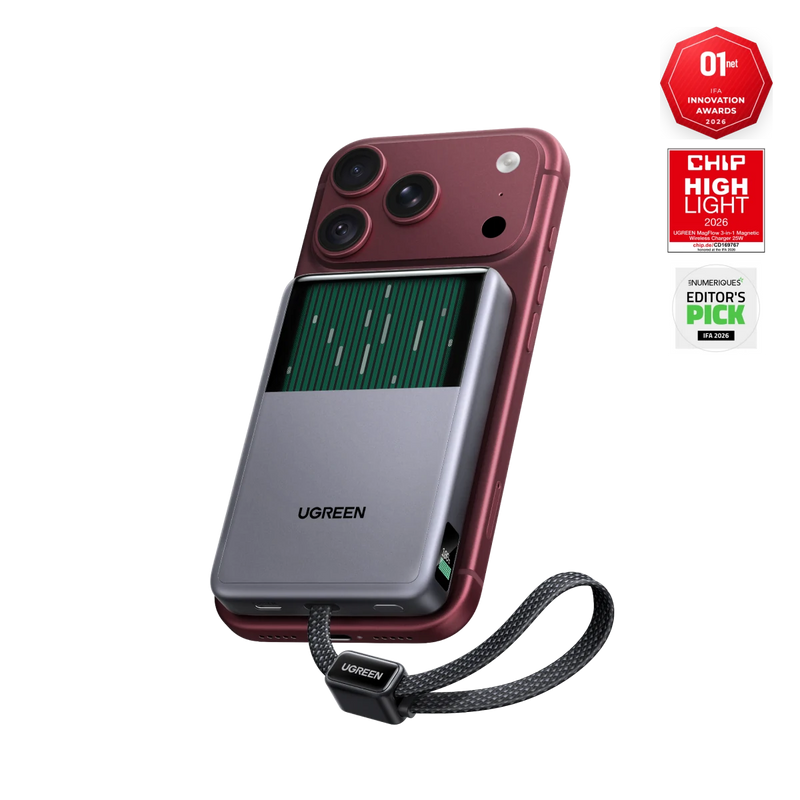
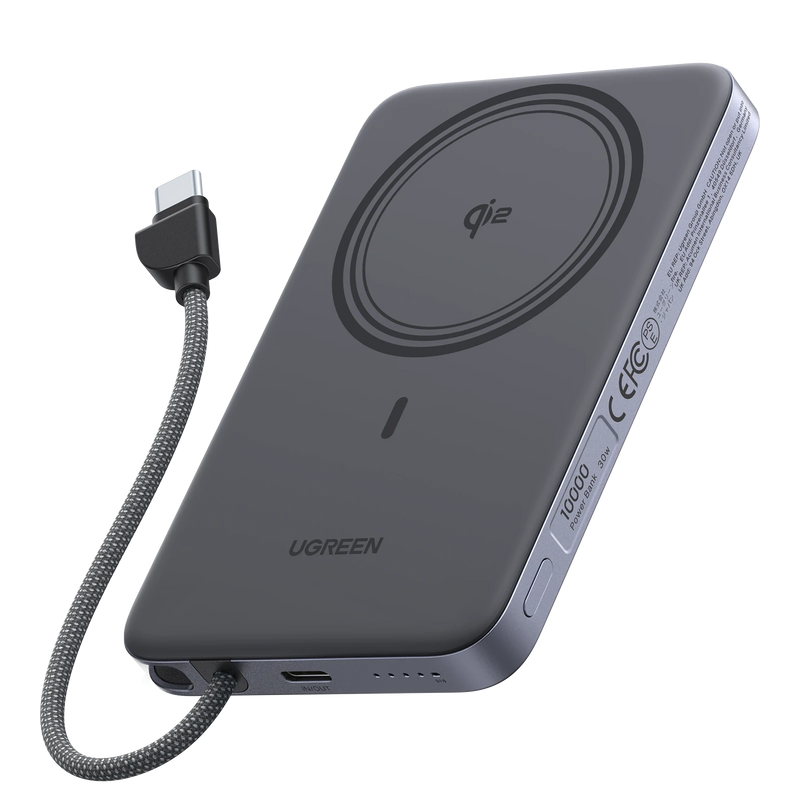
The UGREEN MagFlow Pro Magnetic Power Bank (10,000mAh, Qi2 25W, 45W Built-in USB-C Cable) weighs 220 g.
Together, the phone and power bank come to approximately 469 g, before adding a phone case or anything else.
That does not make a 10,000mAh power bank too heavy. It simply means the extra reserve has a measurable portability cost.
If you expect to use that additional capacity during a long day, the trade-off may be worthwhile. If the battery is likely to stay unused in your bag, carrying nearly another phone's worth of weight may be harder to justify.
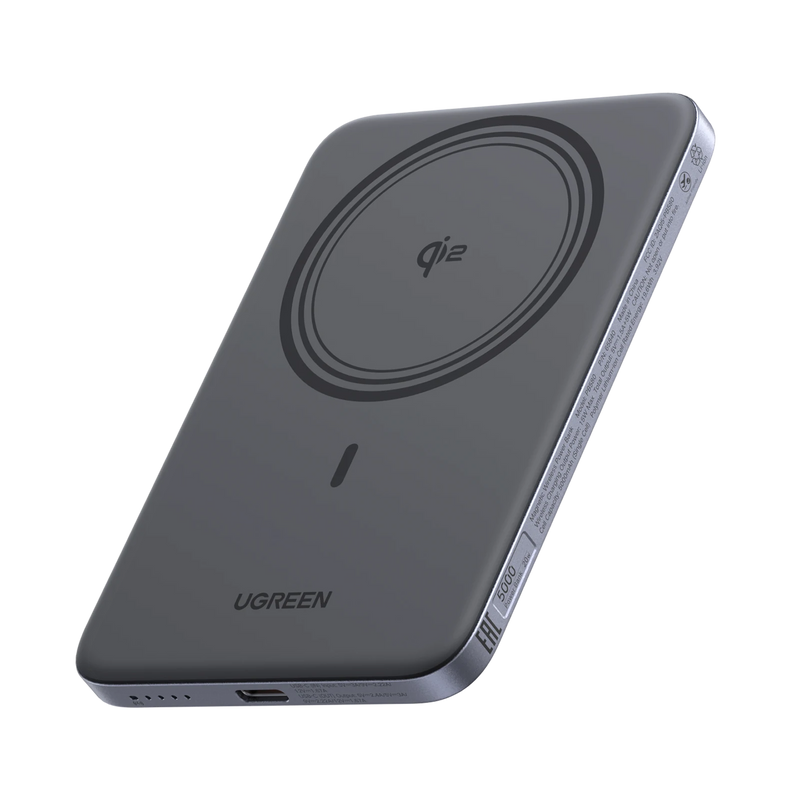
For comparison, the UGREEN MagFlow Air Magnetic Power Bank (5000mAh, Qi2 15W) weighs 127 g and is 8.6 mm thick. A lighter 5,000mAh option therefore reduces the added weight considerably, in exchange for having less rated battery capacity available.
You can compare different capacity and weight options in the UGREEN MagSafe power bank collection.
Normal commute: should you carry backup power?
Look at how much battery you usually have left at the end of your commute and working day rather than assuming that every iPhone 18 Pro Max user needs the same backup setup.
Messaging, music, browsing and occasional navigation may leave one user with plenty of battery remaining while a longer commute, weak mobile signal or heavier screen use can produce a very different result.
If your normal routine consistently leaves a comfortable battery margin, the extra weight of a power bank may not add much value.
If your routine regularly brings the battery close to the level where you start changing how you use the phone, a lighter backup can provide more flexibility without committing to the heaviest option.
Travel and long days away from a reliable socket
Long travel days are one of the clearest situations in which extra battery capacity can become useful because access to a convenient and reliable charging point can be inconsistent.
Navigation, digital tickets, camera use, messaging, mobile data and entertainment can all accumulate over a long journey.
A power bank also means you do not have to plan every part of the day around finding an available socket.
If you are flying, check the power bank's labelled Wh rating and the latest rules from your airline before you travel. Current IATA passenger guidance limits passengers to a maximum of two lithium-ion power banks not exceeding 100 Wh each, requires power banks to remain in carry-on baggage, advises against storing them in overhead lockers and allows airlines to apply stricter rules.
The important point for this article is not that every 10,000mAh power bank is automatically hassle-free for air travel, but that you should check the product label and your airline's current policy before flying.
Navigation, hotspot and heavy mobile-data use
Extended navigation, hotspot use, sustained mobile-data activity and poor signal conditions can increase power consumption over a long day.
Navigation keeps location services active and often keeps the display on for extended periods. A personal hotspot uses the phone's wireless radios to provide a connection for another device, while poor signal conditions can also increase the work required to maintain a cellular connection.
None of these activities automatically means you need a power bank. The question is whether your expected usage leaves enough battery margin for the rest of the day.

Photography and video shooting
Camera-heavy days can create a stronger case for portable backup because the display, camera system and on-device processing may remain active for long periods.
Recording video, keeping the viewfinder active, reviewing footage and editing on the phone all contribute to energy use.
If you know that a particular day will involve far more camera use than your normal routine, carrying reserve power gives you a way to top up without depending on a nearby socket.
Magnetic wireless vs wired power bank for iPhone 18 Pro Max
Magnetic wireless charging prioritises convenience, while a USB-C connection gives you a wired alternative. Which one matters more depends on when and how you expect to top up.
Apple lists MagSafe and Qi2 wireless charging at up to 25 W for iPhone 18 Pro Max.
For Apple's fastest stated wired charging result, the company specifies a 60 W-capable or higher adapter with Adjustable Voltage Supply and a USB-C charging cable, reaching up to 50% in around 15 minutes under its test conditions.
For MagSafe, Apple states up to 50% in around 30 minutes with a 35 W or higher adapter and MagSafe Charger under the specified conditions.
A portable power bank does not automatically reproduce either Apple test simply because it includes USB-C or Qi2. Check the output specification of the exact power bank.
A model with both magnetic charging and a built-in USB-C cable gives you the choice between cable-free convenience and a wired connection rather than forcing you to carry two separate charging accessories.
5,000mAh or 10,000mAh: how much backup do you actually need?
Choose capacity around the amount of reserve you expect to use rather than assuming that the largest number is always the best choice.
A 5,000mAh model prioritises lower carry weight and can work well as an emergency or partial top-up option.
A 10,000mAh model gives you more rated battery capacity, but the headline mAh figure does not translate directly into a fixed number of complete phone charges. Conversion losses, charging method, phone activity, temperature and the power bank's own battery-management system all affect the energy that reaches the phone.
For the UGREEN MagFlow Pro Magnetic Power Bank, UGREEN testing recorded approximately 1.28 full charges for an iPhone 18 Pro Max under the test conditions used.
That 1.28 figure should be treated as a product-specific test result for this product-and-device combination rather than a universal result for every 10,000mAh power bank. Actual results can vary with the charging method, starting battery level, temperature, device activity and other test conditions.
For a broader comparison of different capacities, browse the UGREEN power bank range.
What features matter once you decide to carry one?
Once you know that backup power is useful for your day, focus on the features that affect how you will actually use and carry it.
- Capacity: choose a level that provides the reserve you need without adding more weight than you want to carry.
- Wireless power: if you want access to the iPhone 18 Pro Max's highest supported Qi2 power tier, look for a compatible Qi2 25 W solution.
- Wired output: check the actual USB-C output rather than assuming that the presence of a built-in cable automatically makes charging faster.
- Thermal design: wireless charging generates heat, and thermal conditions can influence charging power over time. Thermal-management features can help manage that heat but do not override the phone's own charging curve or thermal controls.
- Weight: consider the phone and power bank as one carry setup rather than evaluating the power bank's weight in isolation.
Our MagSafe power bank buying guide covers charging standards, capacity, thermal design and magnetic charging in more detail.
If you want to understand why a 25 W rating does not mean the charger remains at 25 W throughout an entire session, see our guide to peak vs sustained wireless charging performance.
Choosing a power setup that fits your day
The best backup setup is the one whose extra capacity you are likely to use often enough to justify its weight.
The UGREEN MagFlow Pro Magnetic Power Bank (10,000mAh, Qi2 25W, 45W Built-in USB-C Cable) combines a 10,000mAh rated capacity with Qi2 wireless charging up to 25 W and wired USB-C output up to 45 W.
It weighs 220 g, so paired with the 249 g iPhone 18 Pro Max, the two devices weigh about 469 g before a case.
UGREEN testing with the MagFlow Pro Magnetic Power Bank and iPhone 18 Pro Max recorded approximately 1.28 full charges under the test conditions used. Actual delivered capacity will vary with charging conditions and device use.
The power bank also uses CryoPulse Multi-Layer Cooling, including a liquid cooling layer, to help manage heat during higher-power wireless charging. This thermal design should not be treated as a guarantee that peak wireless power will remain constant throughout an entire charge.
Its built-in USB-C cable supports up to 45 W output, providing a wired charging option alongside magnetic wireless charging. This is below the 60 W-capable AVS power source used in Apple's fastest stated iPhone 18 Pro Max wired test, so the two figures should not be treated as the same charging configuration.
The Smart Digital Display can show charging wattage, remaining battery level and total cycle count, giving you more information about how the power bank is operating.
If 220 g is more backup weight than you want to carry every day, a lighter 5,000mAh option can reduce the portability cost. The trade-off is lower rated capacity and, depending on the model, a different wireless power level.
You can compare portable magnetic formats in the UGREEN wireless and magnetic power bank collection, or browse broader charging options in the iPhone charger collection.
For the current Qi2 25 W magnetic charging lineup, see the UGREEN MagFlow Series.

Conclusion
The longer battery life of iPhone 18 Pro Max makes a power bank less automatic than it may have been with an older phone, but it does not make portable backup unnecessary for every user.
The most useful question is whether your own daily battery margin justifies the extra carry weight.
A 249 g iPhone 18 Pro Max paired with a 220 g 10,000mAh MagFlow Pro power bank comes to approximately 469 g. If you regularly need the additional reserve on travel days, long periods away from power or heavy-use days, that weight may be worthwhile. If your phone normally reaches the end of the day comfortably, a lighter backup or no daily power bank may make more sense.
For the UGREEN MagFlow Pro Magnetic Power Bank, UGREEN testing with iPhone 18 Pro Max recorded approximately 1.28 full charges under the test conditions used. That gives you a product-specific reference point for this product-and-device combination without assuming that every 10,000mAh power bank delivers the same result.
Explore UGREEN Charging Accessories for iPhone 18 Pro, iPhone Duo, and More
FAQs
Does iPhone 18 Pro Max need a power bank?
Not automatically. Check how much battery you normally have left at the end of the day and whether your schedule includes long periods without reliable access to charging. Travel, extended navigation, hotspot use and camera-heavy days can increase the value of portable backup.
How long does iPhone 18 Pro Max last?
Apple rates iPhone 18 Pro Max for up to 29 hours of typical use, up to 43 hours of video playback and up to 38 hours of streamed video playback. Real battery life varies according to signal, brightness, apps, temperature and how you use the phone.
How much do iPhone 18 Pro Max and a 10,000mAh magnetic power bank weigh together?
The iPhone 18 Pro Max weighs 249 g. The UGREEN MagFlow Pro Magnetic Power Bank weighs 220 g, so the combination is approximately 469 g before adding a phone case or other accessories.
How many times can a 10,000mAh power bank charge iPhone 18 Pro Max?
There is no single answer for every 10,000mAh power bank because the rated capacity does not transfer to the phone without losses. For the UGREEN power bank tested for this article, UGREEN recorded approximately 1.28 full charges for iPhone 18 Pro Max under the test conditions used. Actual results can vary with charging method, battery level, temperature and device activity.
Should I choose a 5,000mAh or 10,000mAh power bank?
A 5,000mAh model can make more sense when reducing daily carry weight is the priority and you mainly want emergency backup. A 10,000mAh model provides more reserve capacity for longer days but adds more weight. Choose according to how much backup you are likely to use rather than capacity alone.
Do I need a Qi2 25 W power bank for iPhone 18 Pro Max?
Only if you want access to the phone's highest supported Qi2 wireless power tier. The iPhone 18 Pro Max supports Qi2 wireless charging up to 25 W, but compatible lower-power wireless chargers can still charge the phone at their supported power level.
Is wired charging faster than magnetic wireless charging?
Apple's fastest stated wired test for iPhone 18 Pro Max reaches up to 50% in around 15 minutes using a 60 W-capable or higher AVS adapter and USB-C cable. Its stated MagSafe test reaches up to 50% in around 30 minutes with a 35 W or higher adapter and MagSafe Charger. A power bank's actual wired and wireless performance depends on its own output specifications and the charging conditions.
Can I take a power bank on a plane?
Power-bank rules depend on battery energy and airline policy. Current IATA passenger guidance allows a maximum of two lithium-ion power banks not exceeding 100 Wh each and requires them to remain in carry-on baggage. Airlines can apply stricter conditions, so check the labelled Wh rating and your airline's latest policy before flying.
Quick Navigation

Top Picks for You

22%
OFF
32%
OFF
Related Articles

Best iPhone Duo Accessories: Chargers, Power Banks and Stands for a Foldable iPhone
Sep 18, 2026

Best Charging Accessories for iPhone 18 Pro and Pro Max: What Should You Buy First?
Sep 17, 2026

How to Build a Minimal Charging Kit for Travel
Jun 18, 2026

MagSafe Power Bank Buying Guide: What to Look for Before You Buy
Sep 17, 2026

Peak Charging Speed vs Sustained Wireless Charging Speed: Why Temperature Matters
Sep 07, 2026