The Ultimate College Packing List: Essential Items for Campus and Halls
Every September, the same scene plays out in a car park outside a block of halls.
A boot crammed with things that felt essential in August. A student carrying a lamp they’ll never switch on, a wok they’ll use once, and eleven jumpers. And somewhere in a drawer at home, still plugged into the wall, the charger and cables they actually needed and now need to buy again.
Packing for university is a strange task because you’re preparing for a life you haven’t lived yet. So most people solve it by bringing everything.
Here’s a better approach: work out what your accommodation already gives you, pack the things you’ll actually reach for in week one, and buy the rest once you’ve seen the room.
This college packing list is organised the way you’ll pack, category by category, with an honest note on where students tend to overdo it. Two categories are worth getting right first time.
Documents, because you can’t replace them on a Sunday. And tech, because everything else in your degree now runs through it.

Before you pack, check what your accommodation already provides
Most halls come furnished with a bed, mattress, wardrobe, desk and chair, so your packing list starts with what’s missing rather than everything you own.
According to UCAS, a student room usually comes kitted out with those basics, and many shared kitchens arrive with a kettle and a toaster already in place. Buy a duplicate of either, and you’ll be storing it under your bed for a year.
Your accommodation will publish its own list of what’s provided and what’s not allowed. That list beats any guide online, including this one, so find it before you start filling boxes.
And keep one thing in mind while you pack: student rooms are smaller than the photos on the website suggest. Anything you’re genuinely unsure about can be bought in week two, once you know what the space can actually take.
Documents and admin: the folder that saves you a fortnight
Keep every document you’ll need in a single folder that travels in your hand luggage, because these are the only items on this list you can’t buy locally when you arrive.
Pack:
- Photo ID, so a passport or a driving licence
- Your accommodation contract and room confirmation
- University enrolment letter, course details and timetable
- NHS medical card or number, plus what you need to register with a GP near campus
- Bank details and your card reader, if your bank still uses one, and your National Insurance number, if you plan to work
- Repeat prescriptions, and a written note of the medication names and doses
- Insurance details, and a couple of passport photos for society and gym cards
It’s the dullest category here and the one that pays for itself fastest. A missing enrolment letter turns freshers’ week into a queue. While you’re at it, photograph or scan the lot to your phone and cloud storage, which takes ten minutes and means a lost folder is an inconvenience rather than a disaster.
Clothing: pack for a term, not for a year
Two weeks of everyday clothes and one smart outfit is enough, because wardrobe space in halls is limited and you’ll be home before winter properly arrives.
Bring enough for roughly two weeks between laundry loads, one outfit you can wear to a presentation or a formal, and a coat that’s actually waterproof rather than technically water-resistant. The walk across campus is not optional, and you’ll do it in the rain more often than the prospectus implies.
Add comfortable shoes, because nobody warns you how much walking a timetable involves, and flip-flops if you’re sharing a bathroom. Something for the gym, a laundry bag, and that category is done.
The seasonal swap at Christmas is normal. Everyone does it. Pack for the term in front of you and leave the winter coat and the ski jacket where they are. For most terms, you’ll go home anyway, so you can always swap stuff out seasonally.
Bedding, bathroom and the things you’ll use every day
Bedding and toiletries are the two categories students most often arrive without, precisely because they’re so obvious that everyone assumes they’ve already been dealt with.
For the bed: a duvet and pillows, two sets of bedding so one is always clean while the other’s in the wash, a mattress protector, and towels. Check the bed size with your accommodation before you buy anything, because it varies more than you’d expect.
For the bathroom and general upkeep: toiletries, a shower caddy if the bathroom is shared, a small first aid kit, painkillers, and any medication you take regularly. Nothing elaborate. It’s the stuff you’ll want at 11 pm on a Tuesday when the shops are shut.

Image from unsplash
Dorm and room supplies: making a small room work
The room supplies that matter are the ones that create space, keep things charged, and let you cook and clean without borrowing from a flatmate you’ve known for six hours.
Kitchen. Check what’s shared first, then bring your own mug, plate, bowl, cutlery, a decent pan, a sharp knife, a chopping board, a reusable water bottle and a couple of food containers. Resist the full kitchen department. Communal kitchens fill up fast, and the person who arrives with a spiraliser is not the person cooking with it in November.
Cleaning and laundry. Washing-up liquid, laundry detergent, bin bags, and a drying rack if there’s floor space for one.
Storage. Under-bed boxes, hangers, a door hook, a desk lamp. In a room this size, the only storage that helps is storage that goes upwards or underneath.
Power. An extension lead appears on every packing list, and it’s fine, but it solves the wrong half of the problem. What you actually need is a charger that can run the whole desk from a single socket.
The UGREEN Nexode 100W Charger with Retractable Cable is built for exactly this. The built-in 0.7 m USB-C cable retracts into the charger itself, so the cable cannot be forgotten separately from the charger, and the remaining USB-C and USB-A ports cover your phone and headphones while the laptop charges.
One thing worth checking rather than assuming: candles, incense, portable heaters and most cooking appliances are commonly restricted in halls. Your accommodation’s own rules will say, and it’s a five-minute check that saves an awkward conversation on move-in day.
Study materials: the boring list that quietly decides your first term
Buy the stationery, wait on the textbooks, and set up your notes and backups before week one rather than during it.
Stationery is cheap and always needed at the worst possible moment, so bring notebooks, pens, highlighters, a couple of folders and some sticky notes. Nothing exotic.
Textbooks are different, and here’s a piece of advice worth more than the price of this list: don’t buy them yet.
Reading lists change between the website and the first seminar. The library will have copies. Second years sell theirs for a fraction of the cover price in week two. World of Books and eBay typically have much cheaper copies.
Students routinely spend hundreds of pounds in August on books they open twice, so save yourself time and money here.
Beyond that, a desk lamp, headphones for the library, and a bag that can survive being overloaded for three years.
Then there’s the desk itself. Your desk in the halls is your entire office: lectures, essays, group calls, everything. Making the laptop behave like a proper workstation is worth more than any furniture you could add to the room.
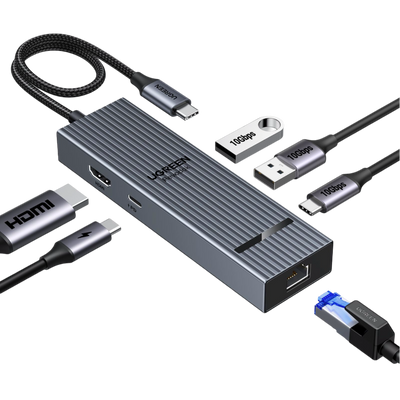
The UGREEN Revodok USB-C Hub does that with one cable, adding HDMI at 4K 60Hz for a second screen, Gigabit Ethernet for when the campus Wi-Fi buckles at deadline season, and an SD card reader for camera and project files. It supports up to 100 W USB-C PD input and can deliver up to approximately 85 W to the laptop when used with a compatible 100 W charger and cable, with part of the power reserved for the hub itself.
For more detail on choosing the right setup, see our guide to the best docking station for MacBook Air and MacBook Pro.
Tech essentials that keep university life running
Your laptop, your phone and the kit that keeps them running are the one category where cutting corners costs you, because every deadline, lecture and group project now routes through them.
Students carry more devices than almost anyone, and think about how to power them less than almost anyone. The laptop gets researched for weeks. The charging setup gets whatever was in the box.
The devices themselves are straightforward: a laptop or MacBook, a phone, a tablet if you take notes on one, headphones, and enough storage for a term of coursework. What makes the difference is the three things around them.
One charger that covers everything
The problem is familiar by day three: a laptop brick, a phone charger and a plug for the earbuds, all competing for two sockets. Modern GaN chargers solve this by fitting real power into a small body, and the numbers are more forgiving than people assume.
MacBook Air charging requirements vary by model and configuration. A 65 W charger is suitable for many everyday setups, although some models require 70 W or more to reach their maximum fast-charging performance.
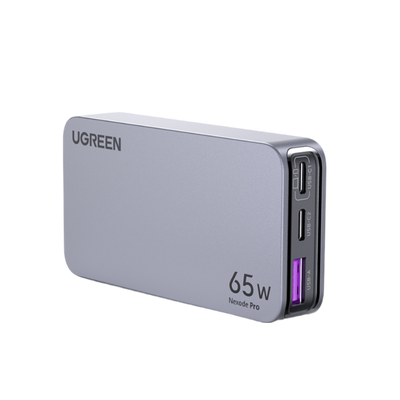
The UGREEN Nexode Pro 65W 3-Port GaN Charger puts two USB-C ports and a USB-A into something that weighs 113 g. In UGREEN tests, the USB-C1 port charged a compatible MacBook Air M2 from 0% to 51% in 30 minutes under the stated test conditions. It’s small enough to live in your bag rather than being unplugged from the wall every morning, which is the whole point.
Worth knowing: the total 65 W output is shared when several devices are plugged in, so the laptop takes the biggest share and nothing necessarily runs at its maximum charging speed. For routine top-ups between lectures, the convenience of using one charger may matter more than reaching maximum speed on every device.
Power that travels with you
A campus day can run from a 9 am lecture to a 7 pm society meeting with no socket in sight, which is where a suitable power bank becomes useful because lecture theatres were not designed with charging in mind.
The UGREEN MagFlow Air Magnetic Power Bank 10000mAh attaches magnetically to a compatible iPhone or magnetic case and supports Qi2 wireless charging at up to 15 W. At 13.9 mm thin, it doesn’t turn your phone into a brick you resent carrying.
It has a USB-C cable built in too, so it’ll top up a tablet on the way to the library.
Cables that don’t throttle you
This is the detail almost nobody checks. A USB-C cable rated for 60 W can limit a higher-powered charger to 60 W. For charging above 60 W, use a suitable 5 A electronically marked cable. One properly rated cable beats three cheap ones from a service station.
For the deeper version of all this, including docks, stands and storage, see our guide to back-to-school tech essentials.
Commonly forgotten items
The things students forget are never the expensive ones. They’re the small items that only announce themselves at 11 pm when nothing is open.
- Check your accommodation’s fire-safety rules and never prop open a fire door.
- A travel adapter if you’re arriving from outside the UK, and a spare phone cable for the one that will inevitably fray.
- Scissors, a screwdriver, and Blu Tack or Command Strips, once you’ve checked what your accommodation allows on the walls.
- A sewing kit, a torch and a bottle opener.
- A backup plan for your coursework, whether that’s a drive or a cloud folder. Every student has heard the story about the laptop that died in week ten. Don’t be the source of it.
- Something from home. The photos and the mug matter more than any packing list will admit.
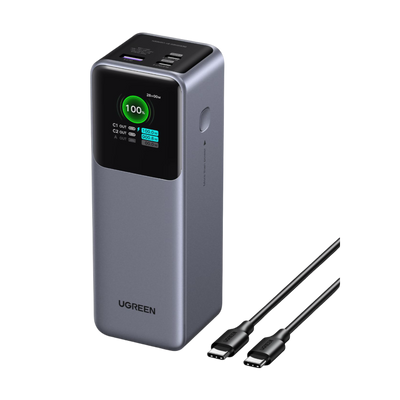
There’s one more, and it’s the item nobody packs, and everybody ends up borrowing. If you commute, go home at weekends, or work a shift somewhere with no free sockets, the UGREEN Nexode Power Bank 25000mAh 200W is in a different class to a phone power bank.
It has enough output to charge a compatible laptop and a display that tells you exactly what’s left rather than four ambiguous lights. With a rated energy of 90 Wh, it falls below the general 100 Wh threshold for power banks carried in hand luggage.
Power banks must not be placed in checked baggage. Under ICAO rules effective from 27 March 2026, passengers are limited to two power banks and must not recharge them during the flight. Check your airline’s own policy before travelling, and review the guide to power bank limits on planes.
What to leave at home
The quickest way to make a small room feel bigger is to not bring the things it can’t hold.
Leave the furniture and the large appliances. The room is furnished, and it’s smaller than you think. Leave the candles, the incense, the heater and most cooking appliances, or at least check the rules before they come with you.
Leave the printer. Campus printing exists, it’s cheap, and a personal printer becomes a shelf by October.
And leave most of your wardrobe, your full book collection and your entire kitchen drawer. None of this is a telling-off. It’s just that everything here is solvable after you arrive, and almost nothing is solvable once your room is full.

Image from unsplash
Conclusion
A good college packing list isn’t the longest one. It’s the one that’s honest about what your accommodation already provides and what you’ll genuinely reach for in the first fortnight. Get the documents, the bedding, the room basics and the tech right, and the rest sorts itself out once you’ve seen the space.
If there are two things worth buying properly, they’re the two that keep everything else running.
The UGREEN Nexode Pro 65W 3-Port GaN Charger means one plug covers your laptop, phone and earbuds, and the UGREEN MagFlow Air 10000mAh Power Bank means a long day on campus doesn’t end with a dead phone and a walk home in the dark without maps.
Then go and enjoy the bit that isn’t on any list.
FAQs
What are the most important college essentials to pack first?
Start with the four things you can’t easily replace or survive night one without: documents (ID, acceptance letter, student finance paperwork, any medical records or prescriptions), bedding, toiletries, and your tech and chargers.
Pack these in a bag you keep with you rather than burying them in a car boot.
Almost everything else — kitchenware, storage, decor, that second desk lamp — can be bought locally in your first week, usually cheaper than paying to transport it.
What do most students forget to bring to university?
The unglamorous stuff that only becomes obvious once you’re in the room. The usual list: a spare charging cable, a basic first aid kit with painkillers, plasters and cold remedies, an extension lead, a can opener, and a backup plan for coursework. Check your accommodation’s fire-safety rules and never prop open a fire door.
Also commonly forgotten: a small toolkit or screwdriver, a laundry bag, and any form of drying rack.
Do I need to bring an extension lead to halls?
Usually yes — student rooms are notorious for having two sockets in inconvenient places. But a multi-port USB-C charger is the smarter first buy: it powers your laptop, phone and headphones from one socket and takes up almost no desk space.
Most students end up with both. Check your accommodation’s rules first, as some halls ban daisy-chained leads or non-surge-protected strips for fire safety reasons.
What tech do I actually need for university?
For most courses: a laptop, a phone, decent headphones, one charger that handles all three, and a power bank for long days on campus.
Before buying anything beyond that, check your course requirements — architecture, film, music and design courses often specify software, storage or hardware that’s expensive to get wrong.
Ask what your university provides too; many offer software licences, cloud storage and equipment loans free.
How much should I pack for my first term?
Pack for the term, not the year. Most students go home at Christmas and swap their wardrobe over, so there’s no reason to bring twelve months of clothes in September. A rough guide: two weeks of clothes (you’ll do laundry), one coat, one smart outfit, and seasonal kit only.
Storage in halls is tighter than you think, and anything you don’t use in the first month, you probably won’t use at all.
Quick Navigation