How to Choose a Travel Power Bank: 2025 Practical Guide
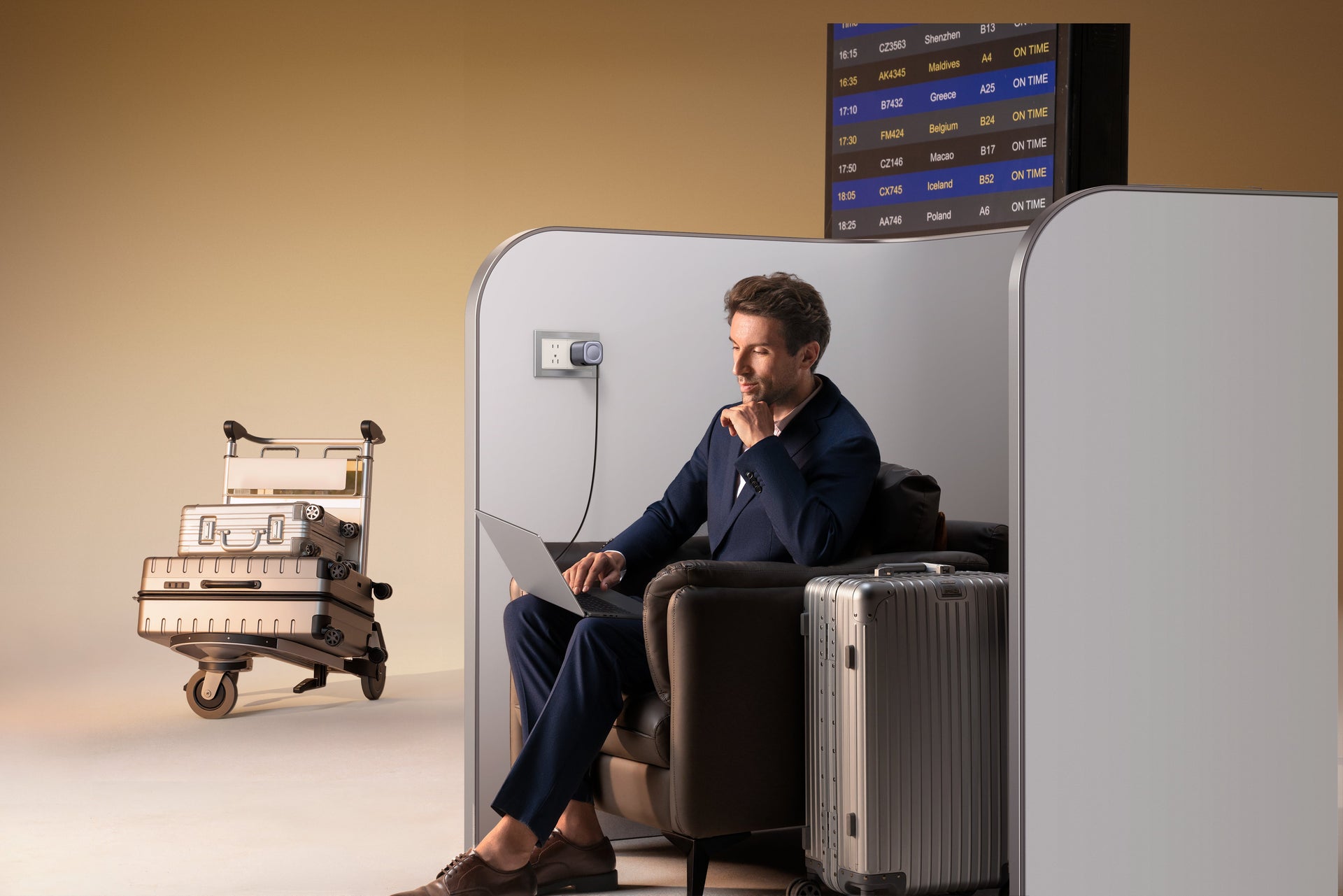
Modern travel now relies on power more than ever. Our phones manage everything from boarding passes and maps to translations, tickets, and payments. However, keeping your device charged while on the go can be challenging, as outlets are often scarce, and layovers can be long.
That’s why it’s essential to know how to choose a travel power bank specifically designed for travel. Not all power banks are suitable. Some weigh too much. Others charge for hours or have special cables that you might forget to pack. A few even exceed airline safety regulations.
In this guide, we will cover the basics of selecting the right travel power bank. We’ll discuss capacity, charging speed, airline-approved sizes, and compatibility with multiple devices. Whether you’re preparing for a long-haul flight or a weekend getaway, choosing the right power bank makes all the difference in ensuring a smooth and stress-free trip.

Travel vs. Everyday Power Bank Use: A Side-by-Side Comparison
| Dimension | Everyday Power Bank | Travel Power Bank |
|---|---|---|
| Usage Duration | Perfect for light use; quick top-ups quickly during commutes, at work, or in a coffee shop. | Built for extended heavy use during flights, layovers, and long adventures. |
| Number of Devices | Often used for phones only; 1–2 ports are standard. | Can charge multiple devices, like phones, tablets, earbuds, and smartwatches, often all at once. Look for 2–4 ports, ideally with USB-C PD. |
| Size and Weight | Can be a little bulky; portability is nice but not critical. | Needs to be compact and lightweight enough to fit easily in a carry-on or sling. Bonus if it’s under 350g. |
| Built-in Cable | Optional; assumes you’ll carry spare cables or be near spares. | Highly recommended. Built-in USB-C or Lightning cables reduce clutter and prevent forgotten cords. |
| Certification & Safety | General safety (e.g. overvoltage) is enough for home use. | Must meet airline standards, below 100Wh (27,000mAh), with smart protections like overcurrent, short-circuit, and temp. sensors. |
Knowing what distinguishes a travel power bank from a regular everyday power bank helps you prevent poor fits. Here are eight scenario-based questions to help you make the right choice for your travel style and power needs.
Is This Power Bank Allowed on a Plane?
When it comes to flying with electronic devices, power banks are among the most regulated items in your carry-on luggage. Most airlines follow strict rules, especially in the U.S. (FAA) and Europe (EASA), to ensure passenger safety.

Understand the Watt-Hour Limit
The magic number to remember is 100Wh. Power banks that are under this limit (approximately 27,000mAh) are generally allowed in carry-on baggage without issues. Power banks ranging from 100Wh to 160Wh can still be used but at the discretion of the airline. Any device with a capacity exceeding 160Wh is not permitted.
If your power bank only lists its capacity in mAh on the box, you can quickly convert it to watt-hours using this formula:
Watt-hours (Wh) = (mAh × 3.7V) ÷ 1000
- 10,000mAh = 37Wh
- 20,000mAh = 74Wh
- 30,000mAh = 111Wh (May be restricted)
Always carry power banks in carry-on bags, never in checked bags. That is not just a suggestion, it’s a safety regulation. Lithium batteries are prone to overheating or short-circuiting. If they are placed in the cargo hold, there is no way for staff to address any issue quickly. Carrying them in the cabin means that any issues are identified and dealt with immediately.
Additionally, security officers may check the watt-hour rating of the power bank during the screening process. If your battery doesn’t explicitly show a watt-hour designation, you may be delayed or asked to leave it behind. That’s why it makes sense to choose a travel-friendly brand. UGREEN, for example, marks their products clearly with airline-approved labels and remains nicely within the safe zone for most models. If you have more than one power bank, remember that total capacity still matters.
The ideal capacity for a power bank is between 10,000mAh and 20,000mAh. These sizes are light enough to carry all day and powerful enough to charge your essential devices. Most importantly, they won’t get flagged at security. With smart options like UGREEN’s flight-approved models, you’ll breeze through the airport and stay powered from take-off to touchdown.
How Much Capacity Do You Really Need in a Travel Power Bank?
Choosing the right power bank isn’t just about picking the biggest number on the box. It’s about finding the perfect power bank capacity that matches your real-world travel needs.
Start with Your Devices and Duration
Consider the following when planning your charging needs: What devices will you need to charge, and how long will you be away from a power source?
- If you’ll only be bringing a phone and earbuds, a 10,000mAh power bank is a great choice. It’s small, lightweight, and gives you roughly two full charges for your phone. Perfect for city weekends and day trips.
- If you’re taking a phone along with a tablet or Switch, go for a 20,000mAh power bank. This capacity offers approximately four phone charges or enough juice to charge several devices simultaneously during your travels.
- If you’ll be sharing power with family and friends, it’s better to pack two lightweight power banks rather than one heavy one. This approach makes them easy to charge, charge in rotation, and easier to distribute them among bags.
Understand Real-World Output
Not all of the energy stored in power banks reaches your device. Typically, power banks can only deliver about 60–70% of their capacity in usable charge. For example:
- A 10,000mAh power bank provides about 6,000–7,000mAh of usable charge.
- A 20,000mAh power bank provides approximately 12,000–14,000mAh of usable charge.
This loss occurs due to factors such as voltage conversion, heat loss, and safety regulation that are often overlooked. To maximise efficiency and minimise waste, look for travel-friendly models with GaN chips or smart power management, such as UGREEN's Nexode lineup. GaN allows the charger to be smaller while still delivering the same amount of power, significantly reduces energy loss, and reduces the risk of overheating.
Do You Really Need to Carry Charging Cables?
Cables are often the weak link in any travel charging setup. They can easily be forgotten in hotel rooms, become tangled in backpacks, or worse of all, get lost entirely. On top of that, your phone, earbuds, tablet, and e-reader may all use different ports. All these situations can lead to added frustration during the trip.
Why Built-In Cables Make Sense
Light travel isn’t just about saving weight; it’s about reducing hassle. Power banks with built-in cables remove a main point of failure. With this feature, there’s no need to double-check your packing list for a USB-C, Lightning, or Micro-USB cable. Simply unplug the attached cable to charge your device.
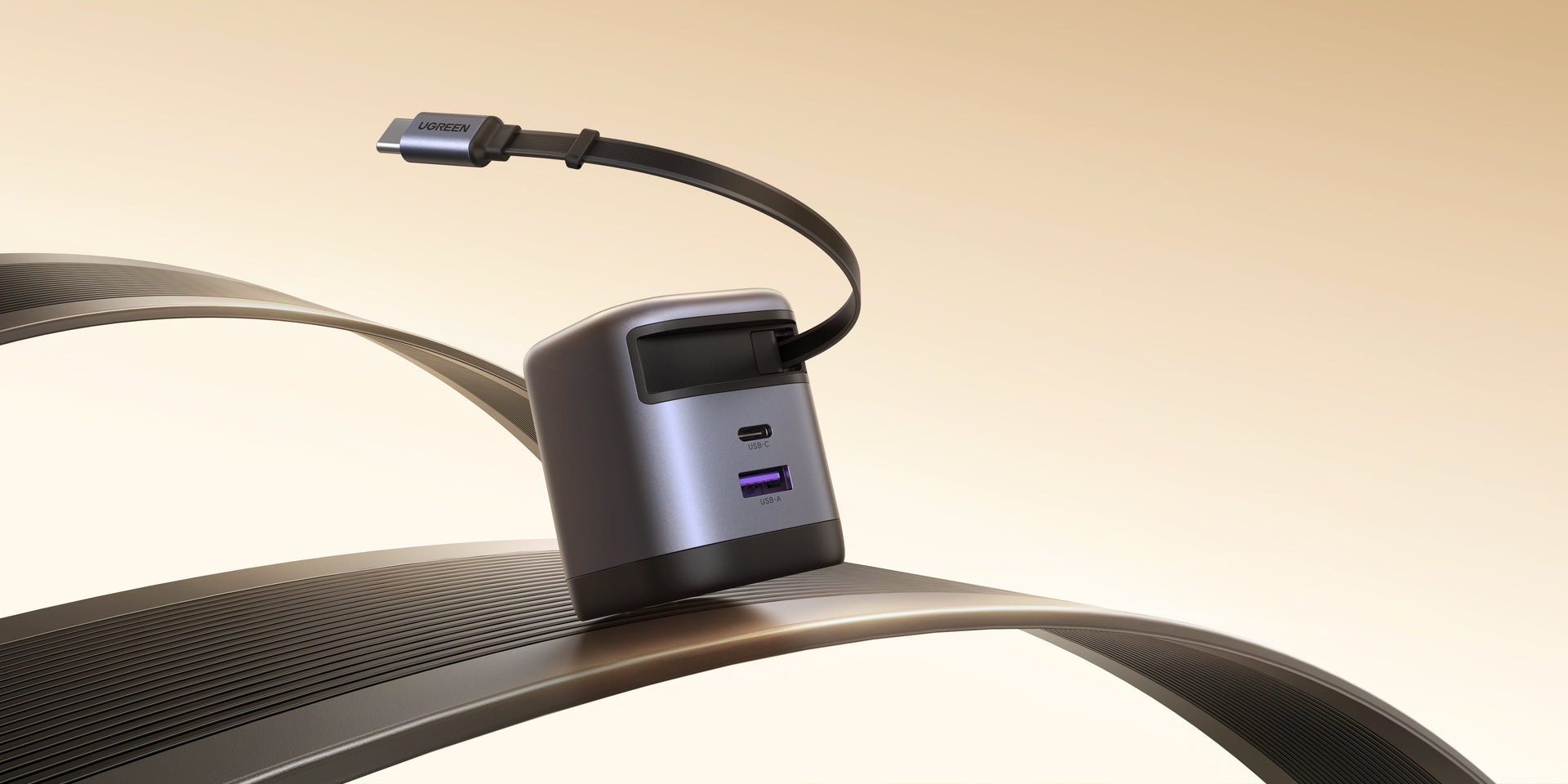
That’s where the UGREEN Nexode Power Bank 20000mAh 165W with Retractable USB-C Cable really shines. The 65cm retractable cable of this power bank has been tested to withstand 25,000 retractions and 10,000 bends, providing both reach and durability in one compact design.

Don’t let its compact size fool you. The Nexode offers a total output of 165W, allowing it to charge a MacBook Pro (M4) to 54% in just 30 minutes. You can charge three devices simultaneously and monitor the charging status with a smart LED indicator. Also, you can travel without worry thanks to 13 layers of built-in protection.

The Nexode is fully airline-compliant, fitting within the 100Wh limit. If you’re tired of tangled cords and bulky gear, a built-in cable power bank like Nexode offers real-world convenience.
{{UGPRODUCT}}
How Many Devices Will You Charge at the Same Time?
When choosing a travel power bank, one overlooked factor is the number of devices you will be charging. If you’re just charging a single phone, one output port should be sufficient. However, if you have additional devices, it’s essential to have at least two output ports. For family vacations or group travel, a power bank with three ports will ensure that everyone stays charged without the hassle of taking turns.

It’s important to remember that more ports don’t always mean more speed. A majority of budget power banks inefficiently split power, reducing the output across ports. A label stating “3 outputs” may hide specs like 20W USB-C and 12W USB-A, which won’t allow for fast charging of multiple devices at once.
When selecting a power bank, look for models with smart power allocation, ideally with two USB-C ports and one USB-A port. USB-C is the standard for speed and efficient output, and dual USB-C ports ensure you can do more with future devices.
In summary, opt for at least two output ports, and ideally three, if you plan on charging multiple devices. Make sure they offer simultaneous fast charging, not just parallel charging. Brands like UGREEN offer smart sharing and flexible designs, providing you with speed and versatility without any compromise.
Does Charging Speed Matter on the Road?
When commuting, time isn't always on your side. Between coffee stops and boarding announcements, you might not have hours to spare near a power outlet. That's where charging speed is important. A few extra watts can mean the difference between charging your device to 10% and 50% before your next train.
It’s important to note that not all fast charging is the same. For instance, iPhones need at least 20W with Power Delivery (PD) to charge effectively. On the other hand, iPads and Switch consoles need a minimum of 30W. Most Android phones also have PPS or Quick Charge, which dynamically adjusts voltage to provide fast charging without overheating your device.
However, many power banks advertise "fast charge" but do not support the correct protocol for your device. To start, look for a power bank with at least 20W Power Delivery (PD) output. If you plan on charging multiple devices or sharing it with others, aim for a model with 30W or more. Remember to check the actual output rather than just trusting the label.
Is It Compact and Lightweight Enough for Travel?
When traveling, bulk can be a drag. Power banks that feel fine at home can suddenly become cumbersome in busy airports or crowded trains. The goal is simple: bring less, do more.
Weight and Dimensions
Thanks to GaN (Gallium Nitride) components, power banks these days can provide more watts without adding extra weight. GaN chips generate less heat and occupy less space, allowing for faster charging in more compact designs. In other words, you no longer need to sacrifice size for performance.
When choosing a portable power bank, look for a flat, edge-free body that won’t bulge or snag in your bag. A bonus if it includes a built-in retractable cable, which means less clutter and fewer forgotten cords. The UGREEN Nexode Power Bank 20000mAh 165W with Retractable USB-C Cable gets it right: slim, efficient, and lightweight, with a built-in USB-C cable and airline-safe specification.

Is It Safe to Use Internationally?
Travelling exposes your power bank to more than just new plug types. New countries come with various voltages, airport regulations, and environmental conditions, all of which can affect how safely your device functions.
Why Safety Standards Matter
A cheap, uncertified power bank may be suitable at home, but on the road, it can overheat, short-circuit, or even lead to security delays. That's why safety certifications are essential rather than optional.
At a minimum, look for the following certifications:
- CE, FCC, and RoHS: These certifications ensure that your power bank meets the basic electrical and environmental safety standards in Europe and America.
- UN38.3: Required for air travel, this certification ensures your device can handle pressure, vibration, impact, and temperature extremes.
Built-In Protections: What to Look For
Premium travel power banks go beyond paperwork. They include hardware-level protections like:
- Overvoltage and overcurrent protection
- Temperature control
- Short-circuit resistance
These features help prevent damage from sudden power surges, which is especially valuable when charging in unfamiliar locations.
Not all brands prioritise safety, but UGREEN includes it in their design. Their power banks feature 13 layers of protection, including a flame-retardant casing and real-time temperature monitoring. So, if a power bank does not clearly state its certifications and protection features, don't travel with it.

Are There Any Bonus Features Worth Having?
While capacity and charging speed make the headlines, bonus features can be incredibly useful when you're on the go. One standout feature is the LED display. Instead of guessing how much battery is left by counting four flashing dots, you're given an exact percentage. This is particularly handy when planning your next charge before a long day out.
Another valuable feature is pass-through charging, which many seasoned travellers swear by. This allows you to charge both your phone and power bank simultaneously from a single outlet in busy places where sockets are limited. Additionally, some newer chargers incorporate auto power detection (or smart wake), which starts charging automatically the moment you plug in a device.
Wireless charging can be appealing, but it's often inconvenient when on the move. Wireless charging tends to have slower charging speeds and lower energy efficiency due to coil misalignment. Additionally, the power bank needs to lie flat on a surface, making it impractical to store in a pocket when walking, commuting, or using other devices. This method is best suited for stationary situations, such as charging your phone in your hotel room at night.
So, are these extra features worthwhile? Absolutely, as long as they don’t add bulk. Prioritise a model with a smart LED indicator and auto-wake feature. Brands such as UGREEN have got this balance just right, with travel-friendly designs and well-considered features that make your charging stress-free.
Conclusion
The best travel power bank today effectively balances capacity, size, charging speed, and safety without added weight. Look for models with a capacity range of 10,000 to 20,000mAh and dual or triple output ports. Additionally, ensure it has airline-friendly watt-hour labelling, and smart features like LED readouts or built-in cables. That's why options like the UGREEN Nexode Retractable series stand out, as they provide high-efficiency charging in a compact, flight-approved design. Whether you’re travelling solo or in a group, choose a power bank that keeps up so your trip doesn't slow down.